

Mail servers make decisions about your emails every single day. You might not see it happening, but it's there. They track how many of your messages bounce. They note which addresses you send to. Furthermore, they watch how recipients interact with your emails. Based on all this, they decide whether to deliver your message to the inbox or trash it.
Most people don't think about sender reputation until something breaks. Then suddenly your emails stop arriving, and you have no idea why.
How Mail Servers Actually Judge You
Sender reputation isn't a single number. It's a collection of signals that mail servers use to decide if you're trustworthy.
The biggest signal is bounce rate. A bounce rate below 1% is ideal. If you send 100 emails and 30 bounce back, that's a 30% bounce rate. Mail servers see this and think: this person is sending to a lot of bad addresses. Maybe they're not careful about their list quality. Maybe they don't validate addresses. Probably they bought a list from somewhere sketchy.
Once a mail server thinks you're careless, it changes how it treats your future emails. Messages that used to go straight to the inbox now land in spam. Messages that used to be accepted now get rejected entirely.
The frustrating part is that a few bad emails can damage your reputation for months. And nobody tells you it's happening. Your emails just silently disappear into spam folders. If your hard bounce rate is at 1% or higher, it is a signal that your sender reputation may be suffering.
Why This Matters More Than You Think
If you run a business that relies on email, sender reputation is a big deal. Consider what happens when your emails stop reaching the inbox:
- Password reset emails don't arrive. Users can't access their accounts. Support tickets pile up.
- Order confirmations go to spam. Customers think their purchase didn't work. They try ordering again or contact support, thinking something is wrong.
- Important notifications never reach people. Security alerts, billing updates, appointment reminders - all the stuff that actually matters.
- Marketing emails get filtered. You spend time writing something valuable, and it never reaches the people you're trying to reach.
The damage compounds because you don't see it happening in real time. You just notice that engagement is down. Deliverability seems worse. Response rates dropped. By the time you figure out what's happening, you've already damaged your reputation significantly.
The Problem With Assuming Everything Is Fine
A lot of people think email list quality doesn't matter much. They assume most addresses are valid. They send without checking. Likewise, they figure if an address bounces, it's just one email.
But this assumption breaks down at scale. When you're sending to thousands of addresses, even a small percentage of invalids adds up quickly. 5% invalid addresses on a 10,000-person list means 500 bounces. That's enough to start affecting your reputation.
And once your reputation is damaged, recovery takes time. Mail servers don't immediately forgive you. You have to prove over weeks or months (!) that you're sending to valid addresses and maintaining healthy list practices.
How Validation Actually Prevents These Problems
This is where validation comes in. Before you send anything, you check your addresses. You remove the ones that won't work. This prevents bounces before they happen.
Fewer bounces mean better sender reputation. Better reputation means better inbox placement. It's straightforward cause and effect.
But validation does something else too - it gives you visibility into your data. When you validate a list, you see what's actually in it. You see that 15% of your addresses are from free providers. You see that 8% are role-based inboxes. You see which addresses might have issues.
This information is valuable because it helps you make informed decisions instead of guessing. Should you remove all free email addresses? Depends on what you're selling. Should you treat role-based inboxes differently? Maybe. Should you clean your list more often? Probably, if a lot of addresses are aging.
Our Email Validator Does Exactly This
We built a free email validator specifically for this. Paste an address and get instant results about whether it's safe to send to. It checks format, domain validity, mailbox status, and flags temporary addresses, role-based inboxes, and other green/red flags.
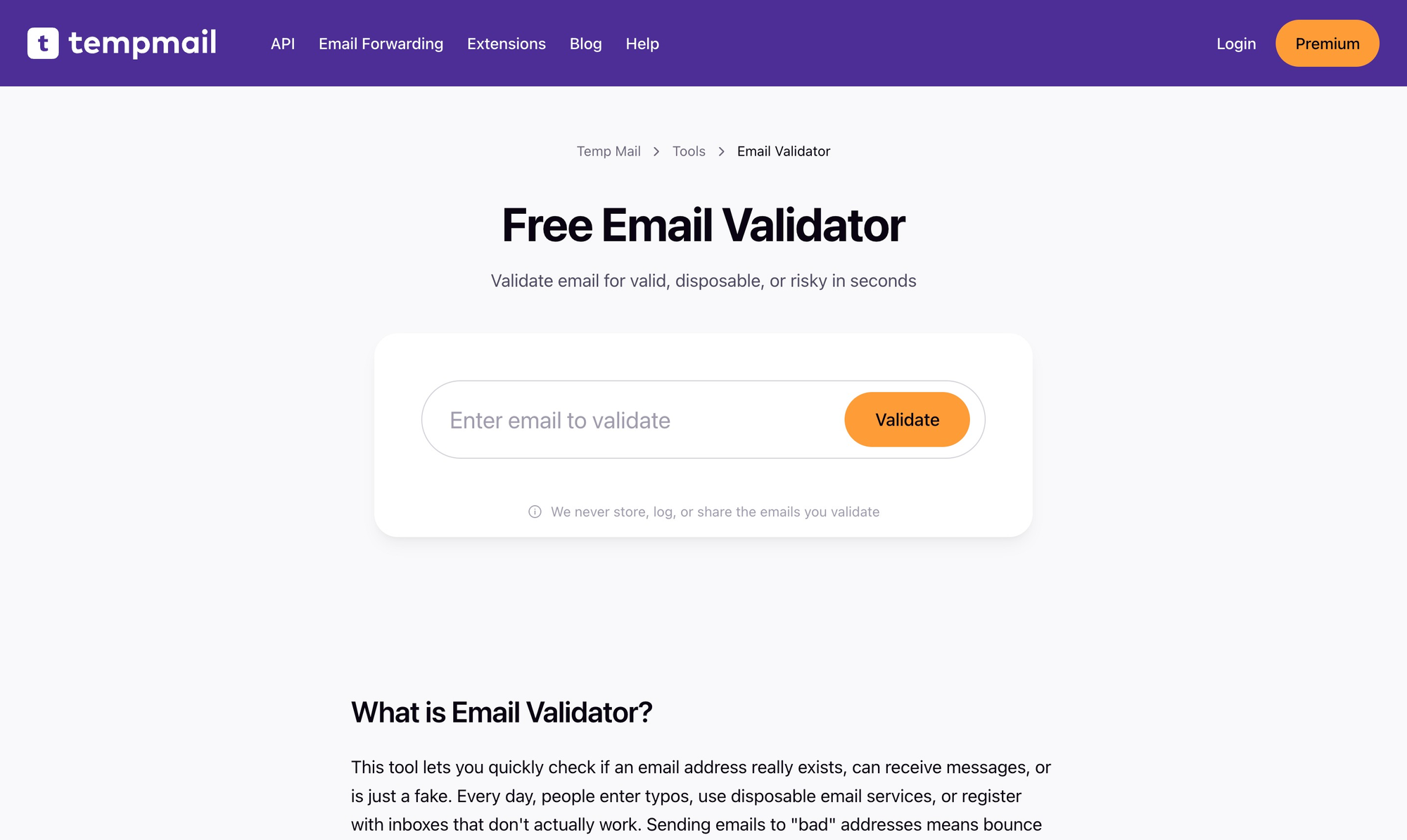
No registration. No emails sent. No data stored.
Just a quick answer that helps you understand what's in your list.
The tool is designed to be simple. You don't need to be technical. You don't need to understand DNS or mail server protocols. Just paste an address and see if it's valid.
The Validation Conversation Nobody Has
Here's something most email tools don't talk about: validation isn't perfect. No system can be 100% accurate. An address might look valid but the mailbox owner might have stopped checking it. A mailbox might be active but configured to reject certain senders. An email might pass validation today and bounce tomorrow when the account gets deleted.
This doesn't mean validation is useless. It means validation is one tool among several. The best approach is validation plus good list hygiene practices:
- Monitor your bounce rates
- Remove addresses that consistently fail
- Clean your list periodically
- Don't just validate once and forget about it
The companies that maintain the best sender reputations aren't the ones that validate once. They're the ones that validate regularly, monitor their metrics, and clean their lists as a normal part of their process.
What Happens When You Actually Do This
If you start validating before you send and cleaning your list regularly, a few things change over time:
- Your bounce rate becomes predictable and low. You know roughly what percentage will fail because you've removed the worst offenders.
- Your inbox placement improves. Mail servers stop filtering you. Your emails actually reach people.
- Your metrics become more reliable. If your open rate is 15%, you know that's a real 15%. You're not losing engagement because half your list is invalid.
- Your sender reputation becomes an asset instead of a liability. If you ever need to escalate an issue with a mail server, you have proof that you maintain good practices.
The Unsexy Truth
Email list maintenance is boring. It's not exciting to write about. It's not the kind of thing that makes for good marketing copy. But it works. It prevents problems. It protects your business.
The companies that get email right aren't the ones with the fanciest tools. They're the ones that understand how mail servers think and build their processes around that understanding.
If you haven't validated your email list in a while, now's a good time to start. Our validator is free. Takes seconds. Might tell you something important about your data.