Spam is the kind of problem most people stop thinking about until it shows up again in their inbox. You open your mail and suddenly see a fake bill, a warning about "account issues", or an offer that looks a little too generous from someone you have never heard of. At first glance it feels like routine noise, but in reality each of these messages can carry a risk, from simple distraction to real financial loss.
And despite years of progress, spam is not going away. It keeps changing and adapting to new technologies and user behavior.
Table of Contents
- The Growing Scale of the Spam Problem
- Why Spam Still Works in 2026
- The Human Cost of Spam
- Smarter Defenses: Beyond Filters
- Introducing Free Spam Checker: A Practical Tool for Everyday Safety
- Common Signs of Spam You Can Recognize Instantly
- Practical Tips to Reduce Spam Exposure
- Why Free Tools Matter More Than Ever
The Growing Scale of the Spam Problem
By 2026 spam still takes up an enormous part of global email traffic, even though filters have become more advanced and people are generally more careful with what they open. In late 2025 almost 47% of all emails sent worldwide were classified as spam, which shows how persistent the issue remains.
Over the years, what we call “spam” has also changed: it is no longer just pushy advertising but a whole range of things from phishing emails to messages with malicious attachments and targeted social‑engineering attempts. Today the difference between a harmless nuisance and a real threat can be only a couple of lines in the message or a single careless click.
Spam also is not limited to email anymore. It has moved into messaging apps, social media, and contact forms on websites, where automated bots leave unwanted or dangerous content. For businesses this is more than just an annoyance: it means lost time and, in some cases, direct financial risk. Phishing remains one of the main entry points for cyberattacks, and spam messages are a common tool for delivering those attacks.
How to block junk emails: choose a spam email blocker
Why Spam Still Works in 2026
Many people picture spammers as amateurs blasting the same crude message to thousands of addresses, but that picture is outdated. Modern spam campaigns use personalization, automatic translation, and AI‑generated text so that emails read more like normal business correspondence or routine notifications. Some of these messages are tailored to look as if they came from a real manager, colleague, or service provider, which makes them much harder to ignore at a glance.
Several factors keep spam effective:
- 𝚿 Psychology. Most scams rely on urgency or curiosity, pressing people to act quickly with messages like “Your account will be closed within 24 hours” or “You have won a free subscription.”
- 🤖 Automation. AI tools make it easy to generate large volumes of convincing, grammatically correct messages that look like they were written by a human.
- 📶 Volume. Even if only a tiny share of recipients respond, sending billions of messages ensures that some people will click.
- 🪫 Human fatigue. People receive so many emails that it is unrealistic to expect full concentration on every single one.
All of this means that even when technical protection improves, a single moment of inattention is often enough for one dangerous message to slip through.
The Human Cost of Spam
Spam does more than simply clutter your inbox; it takes up time, uses bandwidth, and distracts you from real tasks. For smaller companies, one wrong click can lead to lost potential customers, harm to reputation, or a data breach that is expensive and stressful to fix.
For everyday users, spam can result in unwanted subscriptions, hidden recurring payments, stolen passwords or banking details, silent harvesting of personal information through forms, or malware infections delivered through fake invoices and other attachments. While large organizations often have specialists who deal with these risks, individuals and small businesses usually need simpler, more accessible tools that do not require big budgets or complex setups.
Smarter Defenses: Beyond Filters
Most popular email services, such as Gmail, Outlook, and ProtonMail, rely on AI‑based filters, but none of them can filter messages perfectly. Sometimes important messages end up in the spam folder, while dangerous emails still appear in the main inbox.
Because of this, many people add simple extra checks: they look carefully at the sender’s address and domain, avoid logging in via links in emails, test suspicious texts with spam‑detection tools, or use separate addresses for sign‑ups on unfamiliar sites. Manual checking, however, takes time and attention, so it helps to have a simple assistant like Free Spam Checker that can quickly analyze the message.
Introducing Free Spam Checker: A Practical Tool for Everyday Safety
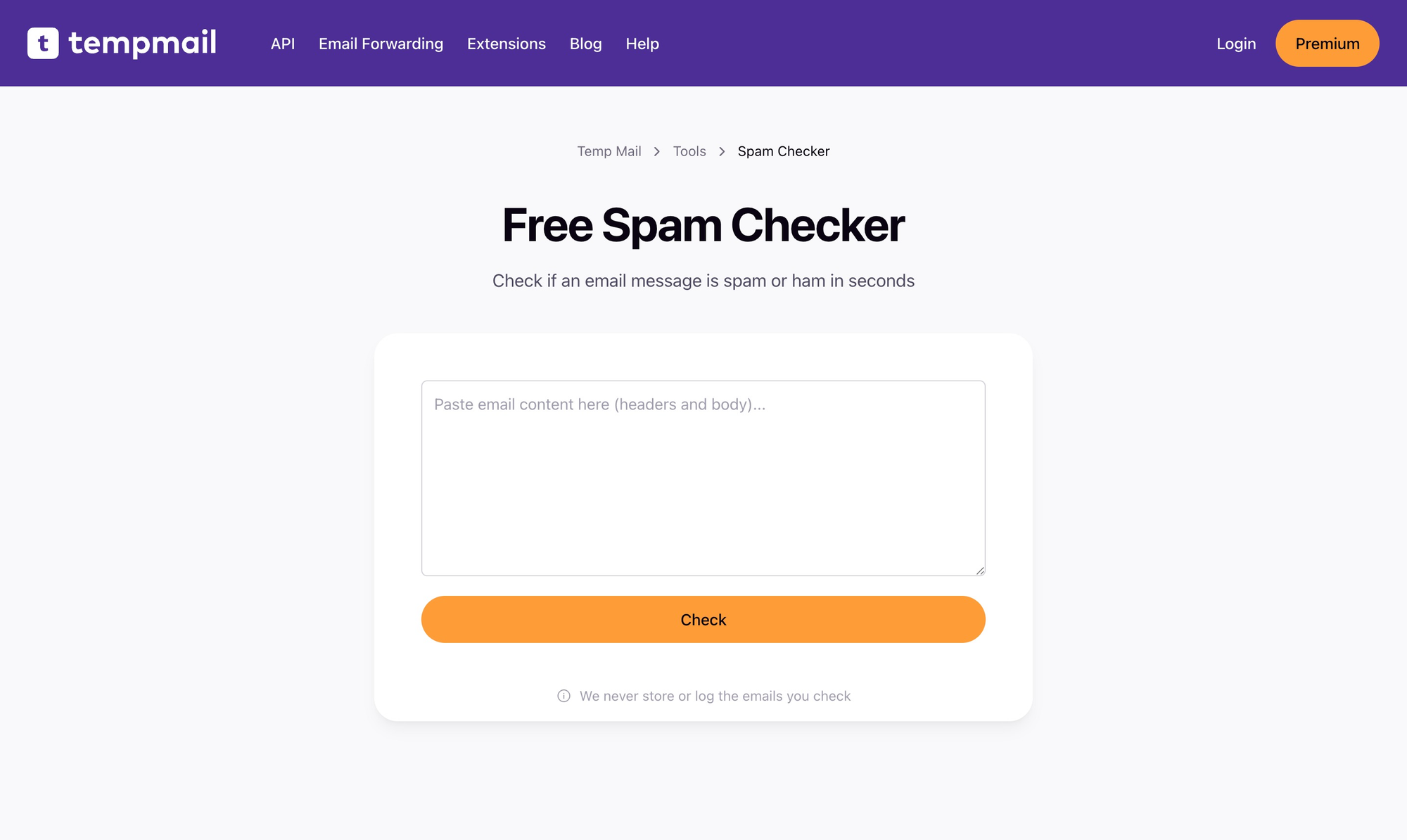
Free Spam Checker is built as a straightforward browser tool for quick content checks, rather than as heavy corporate security software. You copy the full message (including headers) into the form, run the scan, and get a short report on how risky it may look and which elements might trigger filters.
This tool is focused on clarity: instead of simply labeling something as "bad," it highlights specific points so users can better understand the situation. Because the service is free to use, it remains accessible to individuals, freelancers, and small teams that want to tidy up their communication without investing in complex solutions. For many users this is a convenient way to see their messages “through the eyes” of spam filters and adjust content before sending.
For marketers and small business owners, checks like this are also about deliverability — making sure that newsletters and campaigns do not quietly disappear into spam folders. By running emails through a spam checker before sending, teams can see what might raise suspicion and adjust the message accordingly, which helps more messages reach subscribers and improves engagement numbers over time.
Common Signs of Spam You Can Recognize Instantly
There are also simple warning signs that anyone can learn to notice without special tools. Generic greetings such as "Dear Customer", slightly modified domains like "@amaz0n-support.com", strong pressure to act immediately, unexpected attachments, or messages without any clear contact or unsubscribe information are all reasons to slow down and double‑check the sender. Read more about the most common topics of spam emails in EmailTooltester's Spam Statistics 2026.
Recognizing these signs early makes it easier to delete dangerous emails before they cause problems and helps train a more cautious attitude toward any unexpected message.
Practical Tips to Reduce Spam Exposure
To cut down on the amount of spam you receive, it helps not to publish your main email address openly online and to use contact forms or alternative addresses for public pages. Turning on two‑factor authentication for important accounts adds another barrier, even if login data is leaked.
For short‑term sign‑ups — for example, to download a file, get a one‑time discount, or test a service — you can use temporary email services like Temp Mail, which give you a disposable mailbox that you can abandon after use so that spam does not follow you to your primary inbox. For long‑term use, when you want more control and the ability to block individual senders, address aliases from services like Alias Email help route mail through separate "masks", which you can disable if one of them starts receiving spam.
Why Free Tools Matter More Than Ever
In a time when many security products are sold as subscriptions, free tools play an important role in digital literacy and basic protection for those who do not have large budgets. People without corporate accounts face the same threats as big organizations, so giving them simple and understandable instruments helps level the playing field.
Offering something like Free Spam Checker ensures that safer communication is not only available to companies with dedicated security teams but also to ordinary users who just want to keep their inboxes and data under control. No tool can guarantee absolute safety, but accessible solutions plus basic awareness reduce the chances of falling for a spam‑based attack.